


At FairClimateFund, we strive for a fair and transparent carbon market, where local project partners have full insight into what happens with the CO₂ reductions they achieve. Therefore, we believe it is essential that they not only receive the maximum share of the revenues, but also gain a better understanding of how the carbon market works.
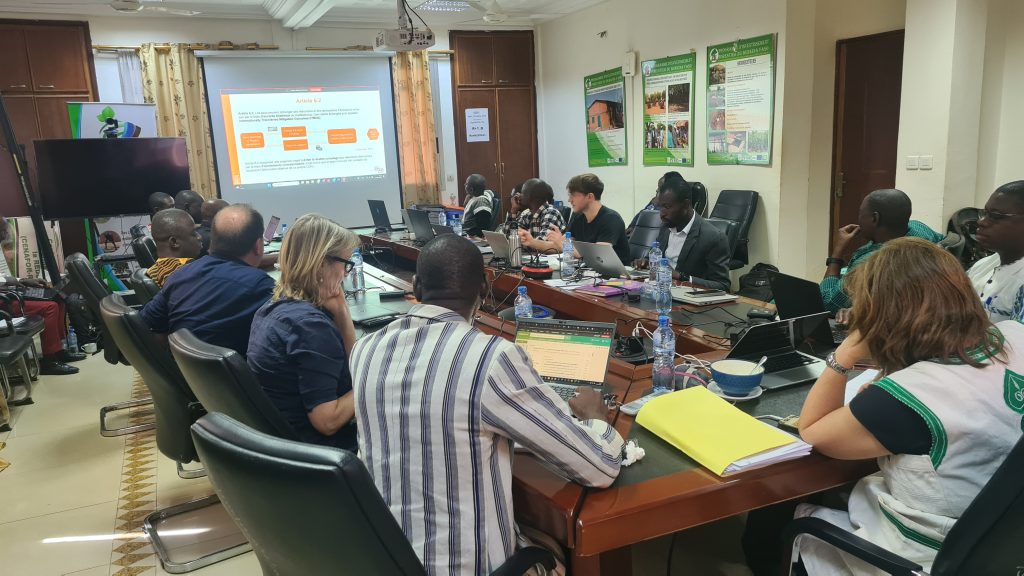
With this vision in mind, FairClimateFund hosted a workshop in Burkina Faso last week as part of the Birds, Bees & Business project for our local implementing partner, Tiipaalga. In addition to Tiipaalga, two other Burkinabè organisations also participated in the workshop: SP-REDD+ (Secrétariat Permanent), which focuses on the national inventory of forests, and PRSA (Programme Résilience pour la Sécurité Alimentaire), which works on a resilient food system.
Climate change and carbon credits
During the workshop, we covered various topics. We delved deeper into the causes and consequences of climate change and how cooking is related to it. Traditional cooking methods in Burkina Faso, such as open fires, significantly contribute to deforestation and CO₂ emissions. Transitioning to cleaner cooking solutions reduces CO₂ emissions and brings numerous health benefits. Additionally, we discussed the role of the voluntary carbon market as a valuable complement to global CO₂ reduction efforts.
Challenges in the carbon market
A key part of our workshop focused on the broader challenges in the carbon market. We held an open discussion on issues such as transparency and integrity and explored ways to collectively ensure a more reliable issuance of carbon credits. This included examining new and improved models to calculate emissions reductions more accurately.
We also gave an update on developments in the carbon market, such as Article 6 of the Paris Agreement and its impact on Burkina Faso. This article regulates international cooperation on carbon reduction, allowing countries to trade emission reductions and jointly meet climate goals. And also discussed important initiatives such as the Integrity Council for the Voluntary Carbon Market (ICVCM) and the Core Carbon Principles (CCP). These frameworks seek to improve the quality of carbon credits. We explored how local partners can deal with these changing standards.
The carbon market is constantly evolving, with new regulations and certification standards. By sharing knowledge and experiences through initiatives like this workshop, we ensure that we continue to develop fair and high-quality carbon credits.
Read more about the Birds, Bees and Business project here
